
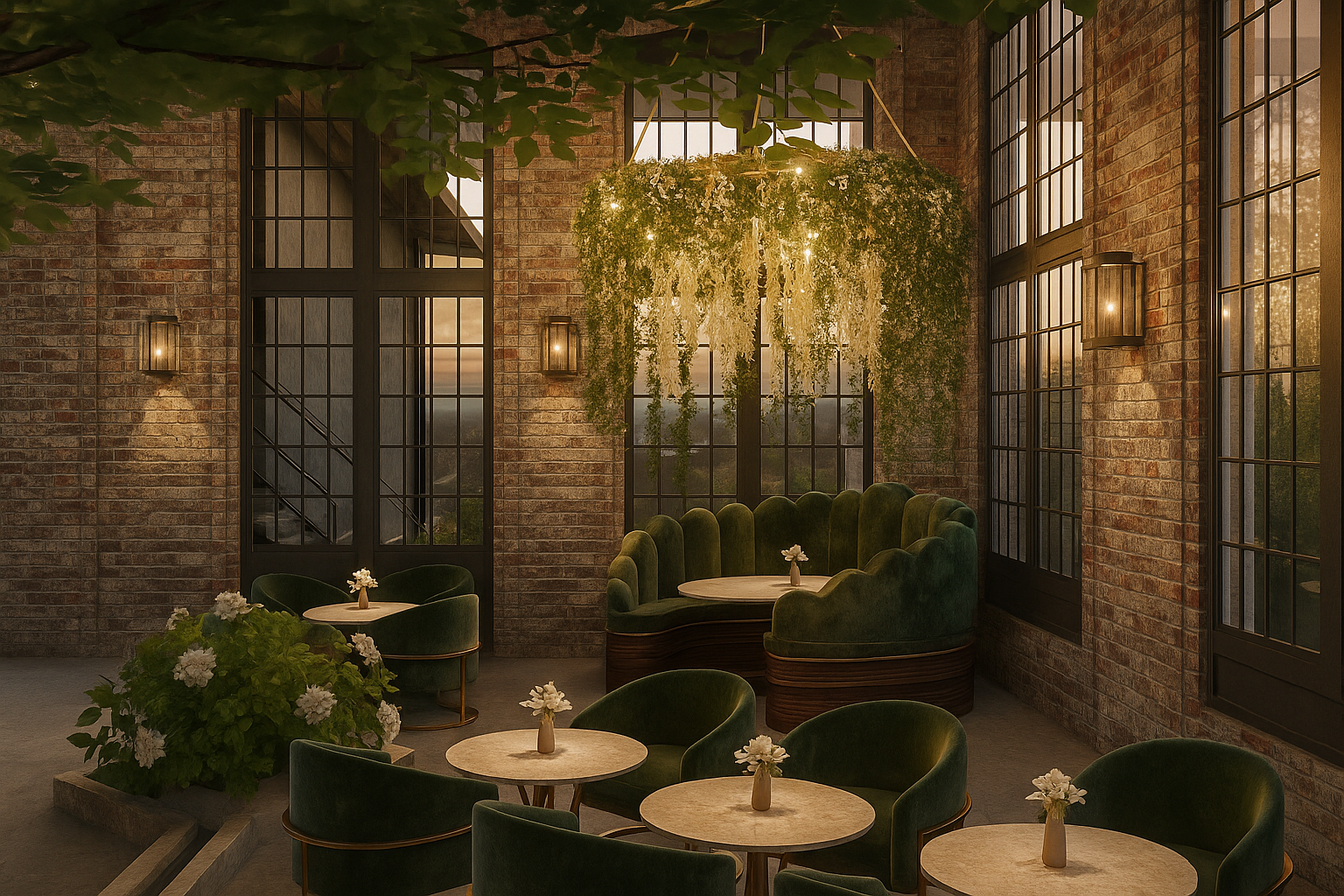
How Your Environment Communicates With the Nervous System
AND WHY IT MATTERS FOR HEALING.
We often think of interior design as something primarily visual. We consider how a room looks, whether the colors work together, whether the furniture is beautiful, or whether the space reflects our personal style.
BUT DESIGN IS NEVER JUST VISUAL.
Every space is a conversation between mind, body, environment, and experience.
Our brains are constantly processing information from our surroundings: light, sound, smell, temperature, texture, color, scale, form, and spatial relationships. Much of this information is being processed without us consciously thinking about it.
This is where the science of neuroaesthetics and environmental psychology begins to change the way we think about interior design - particularly when we are designing spaces intended to support our health and wellbeing.
Neuroaesthetics vs. Environmental Psychology
Neuroaesthetics and environmental psychology both explore how our surroundings affect the brain, body, emotions, and behavior.
The difference is in the lens.
Neuroaesthetics focuses on the brain and body’s response to sensory and aesthetic experiences. Environmental psychology focuses on how people interact with and are shaped by their environments.
Together, they help explain something you probably intuitively already know: Our surroundings can change how we feel, think, and behave.
Once we begin to understand that relationship, design becomes less about how a space looks, and more about how a space shape our daily lives on a much deeper level.
“The physical space we inhabit and the abstract space within our minds - our memories, emotions, associations, and beliefs - continually interact to create our experience of the environment.”
Perception Is Personal
Meet the real critic in the room: your amygdala.
Your brain is constantly processing information from your surroundings, but we don’t experience our surroundings objectively.
Perceived information is fed into the brain through all of our senses and triggers the brain’s emotional centers, which make us react. These emotional centers release nerve chemicals and hormones that can change how immune cells fight disease.¹
What does this mean? Our perception of a situation or space can actually affect our healing responses.
But the way we interpret our environment is subjective.
Our memories, past experiences, cultural background, social conditioning, and personal associations all influence how the brain interprets what it sees.
And our nervous system is the translator.
This explains why the same color, scent, material, or room can make one person feel comforted - and another uneasy, unsafe, or even in danger.
It also means there isn’t necessarily one universally “healing” aesthetic. What feels peaceful to one person may not feel peaceful to another. What one person experiences as comforting or familiar could carry a completely different association for someone else.
So, when we design for wellbeing, perception matters. All subconcious beliefs and patterning need to be considered when determining the most effective solutions for calming the nervous system.
Our Inner & Outer Worlds Are Intertwined
The perception of our current reality is everything.
The physical space we inhabit and the abstract space within our minds - our memories, emotions, associations, and beliefs - continually interact to create our experience of the environment.
One is not whole without the other.
We shape our environments, and in return, our environments shape us.
This reinforces the understanding that people, place, and land do not exist in isolation, but as parts of one interconnected ecosystem.
For me, this is where the conversation around holistic interior design becomes especially important.
Rather than treating a space as a collection of individual materials, furnishings, colors, and objects, we can begin looking at the environment as a whole - and at the ongoing relationship between the person and the place.
Designing for Our Wellbeing
Over time, repeated exposure to environments that feel threatening, chaotic, or overwhelming may contribute to chronic stress.
Chronic stress can affect immune, metabolic, and inflammatory pathways and may influence how certain genes are expressed - potentially contributing to the conditions in which stress-related illnesses develop.¹
By contrast, environments that support safety, calm, connection, and restoration may help reduce unnecessary stress activation and support the body’s recovery and healing processes.
This changes the questions we ask as designers.
If our surroundings continually provide information to the brain and body, then wellness-centered design asks for more.
We begin to ask:
What does their body experience repeatedly?
How can we support the body’s natural rhythms?
Where can we reduce unnecessary stress?
Where can we create opportunities for restoration?
These questions move us beyond designing only for what the eye sees and toward considering what the whole person experiences.
A room can be visually beautiful and still be overstimulating. It can photograph beautifully and still feel uncomfortable. It can follow every current design trend and still fail to support the person actually inhabiting it.
Because ultimately, the nervous system doesn’t care whether something is “on trend.” It is continually receiving and interpreting information from the environment.
Designing for the Subconscious
This is why I believe wellness-centered design requires us to consider both what someone consciously experiences in a space and what may be happening beneath the surface.
Light. Sound. Smell. Temperature. Texture. Color. Scale. Form. Spatial relationships.
Our environments are continually communicating with us. And our individual memories, emotions, associations, beliefs, and lived experiences become part of that conversation.
Because when we understand that our inner and outer worlds are intertwined, interior design becomes more than an aesthetic exercise.
It becomes an opportunity to intentionally shape the environments that, in return, are continually shaping us.
Design Is Never Just Visual
Every space is a conversation between mind, body, environment, and experience.
Keep the dialogue open and you might be surprised by what you discover.
At Studio 36, this understanding is at the heart of our approach to wellness-centered and holistic interior design. We look beyond how a space appears to consider how the environment is experienced - and how design can support the people who inhabit it.
Brittany Snyder, IIDA
BFA Interior Design, NYSID
Certified Practitioner in Feng Shui + BioGeometry
¹Esther M. Sternberg. (2010). Healing Spaces: The Science of Place and Well-Being. Belknap Press: An Imprint of Harvard University Press
